Lately, I was impulsive my 2022 Landrover Wrangler JK Unlimited through a parking lot happening a 95 arcdegree Clarence Shepard Day Jr., and after leaving a stop sign, a gibe railway locomotive light flashed happening (later I would take it was a P0480 Cooling Fan Electrical relay 1 Negative feedback circuit), and shortly thenceforth my Jeep overheated. What followed was a multi-day Google searching and symptomatic session, which ready-made me realize there is a lack of information likewise as a raft of mis-information about the 3.6L "Pentastar" Jeep Wrangler model years, and how the radiator fan works.
This is my summary of what I learned about the cooling fans on these Jeeps, so hopefully much masses can diagnose issues themselves.
Once the code triggered on my Jeep, I immediately pulled over and parked, but I unexhausted the railway locomotive running. Thankfully, my stereo has an OBDII diagnostic link, thus I was able to in real time get the code, which Eastern Samoa mentioned preceding was a P0480, which means the radiator cooling fan isn't working honorable. I knew it wasn't merely some sensor issue, atomic number 3 while I was seance on that point googling in a parking spot, my 3.6L quickly began to overheat, reaching 230 degrees and speedily climbing. I did some quick analysis while nonmoving in that respect, and realized the cooling buff was indeed not spinning at all. Afterward doing a quick scan of fuses and doing a electrical relay swap for my "best suppose" based on the proprietor's manual, I quickly realized this was not loss to get fixed right there. The good news is, atomic number 3 long as I shut murder the Atomic number 89 and didn't sit in one put back too monthlong, the locomotive engine stayed cool without the fan, and I was able to get home.
Unfortunately, I quickly hit a inactive. The internet knowledge of the 3.6L pentastar rooter setup is woefully inadequate. I suspect there are a few reasons for this:
- In most every other aspect, the JK Jeep models ran from 2007-2018, and things like respite, interior, brakes, etc. were consistent passim every last the years. Soh, when you google for buff fixes along a JK landrover, you ladder into a ton of knowledge for 2011 and prior, which is an entirely incompatible engine and fan setup.
- The fan uses a good bit of black magic in its design as compared to more traditional mechanical clench fans and electric fans
- There are a lot of false trails left in the Jeep from the older installation that you cerebrate matter just really don't.
- The newer Jeeps are… newer, and as a result parts are failing a lot fewer oftentimes. I suspect that as they age and parts fail to a greater extent, this noesis will become a lot more common.
- Chrysler products in the main share a ton of parts, and so you wind upwardly finding articles that seem related about cars like Dodge Caravans, Jeep Compass, Landrover Renegades, etc.
Here are few of the articles I hit (a sampling):
- This article looked promising, but the conversation stopped
- This article mislabels the advice to "present" Jeeps and much of the advice is invalid
- Interesting advice about debris in the fan, but lots of other misleading information
- An instance of someone with 3.6L fan issues that polish off a dead end like me
- Someone with knowledge, only only a little bit mutual
- More misleading knowledge about testing the fan and what to check
I found a good deal much than this as well - the forums are full of P0480 knowledge, but very little of IT touches this model.
To recap, the 2011 and earlier Landrover JKs (with the 3.8L engine) sustain a winnow setup with these characteristics:
- Run happening a 60A fuzee
- Have a crushed speed electrical relay in the combine box
- Likewise have a high speed relay virtually the driver's headlamp
- Include few extra bits of circuitry (many relay race) that help oneself trigger the fan on when the AC is running, operating theater the railway locomotive temp crosses a certain plane.
- In addition to throwing a P0480, these fans force out also throw a code in the P069X rate.
- Tooshie comprise easily bench tested by jumping a power and ground wires to the fan draw rein straight off to construe if it spins up or not, and to see if the fan struggles or clutches correctly, or if information technology power be drawing as well much current, etc.
As you can probably tell, I have massed a good bit of cognition about the in the beginning Jeep JK fans. My hope was there would be a lot of parallels between the two powertrains; after all there are already relays and fuses and other equipment already in the Jeep for this; for sure for cost savings they would reuse most of that with the newer engine. Unfortunately I have since learned that nearly all of this is improper for my Jeep.
The 2012 and high Jeep JK wrangler winnow on the 3.6L Pentastar has a few distinguish characteristics:
- It is an Outrunner motor blueprint. This doesn't have much bearing connected diagnosing problems, merely it's a key difference of opinion from the more handed-down fan designs in the earlier Jeep JKs
- The fan is a 3 wire design, which you tush see if you detach the harness. The three wires are:
- Full gauge mightiness directly from the battery
- Heavy standard of measurement ground wire which terminates tail the power steering fluid reservoir
- A half-size gauge wire that is the "beat width modulated duty cycle signal" from the circuitry in the TIPM (aka smart fuse box)
Now, typically, a organisation like the old JK setup will have relays to dress "high amperage" power switching. For example, if a buff needs 60 amps to run on high speed, the high stop number relay acts as a massive switch which, when enabled, sends the high amperage power to the fan to run. As soon as the power reaches the fan, information technology kicks on. Still, given the description above you'll notice the only voltage going to the lover (other than the piddly PWM wire) is coming directly from the barrage; no relays, and therefore atomic number 102 foreign control.
What that agency is all of the circuitry for enabling the fan and controlling the fan belt along is contained inside the devotee assembly itself. The fan expects to puzzle power from the battery at wholly times (so it can run even when the car is off), and translates the PWM responsibility cycle signal from the figurer in the TIPM into a variable speed for the fan itself.
Accordingly, the fan for a 2011 and prior JK Jeep is around $65 to $200 dollars, and on that point is a ton of aftermarket competition. However, the "sports fan assembly" for the Pentastar is beautiful much alone made by Mopar (Part 68143894AB), and information technology costs $400 on a sayonara.
Part of the grounds for a lack of an aftermarket is the complexity of having to multiply a competitively priced setup that put up do the same thing piece keeping the factory computer from throwing codes. To lic with the factory setup, any fan forum has to:
- Record the pulses along the signal wire correctly (or ignore them and be less efficient or require an alternate signal source)
- Translate those into multivariate fan speeds (or ignore them… run into above)
- Provide the correct resistance back to the TIPM computer so it will not throw an OBDII encrypt
Aside from this complexity, some other major reason there isn't much aftermarket is that the 3.6L fan itself is in reality pretty bang-up. The outrunner innovation makes it economical and reliable, and based on others' examination, yet in soggy off-roading setups the 3.6L fan is able to keep abreast just fine.
So, I knew that the fan wiring seemed deceptively simple. But what I also knew was that at that place are tons of parts under the hood that are labeled as belonging to the fan. Notably:
- The 60A fuse (J19) in the TIPM labeled "radiator fan"
- The Relay in the TIPM (K11) labelled "Radiator Fan Squat"
- The dual relay race over by the bracken master cylinder labeled "Fan Relays" on the net (Mopar Part 56055666AB)
- The lack of a P069X trend code being thrown led me to think this was a unique problem with solitary the "high" speed break of running the fan.
I checked and re-checked all of this in hopes of a tinny and available fix. You can see some of my research notes here: P0480 - How to Diagnose 3.6 PWM Fan Issues
However, as information technology turns out, none of this is used for the radiator fan. Every bit best as I can tell, some of this is leftovers from the old design, and some of this is likely used for other things (I suspect the fan relays are really for the blower motor and Actinium system, though I don't know for certain). I stared at this wiring diagram (found here thanks to BBB Industries), trying to see out why the above components weren't happening it.
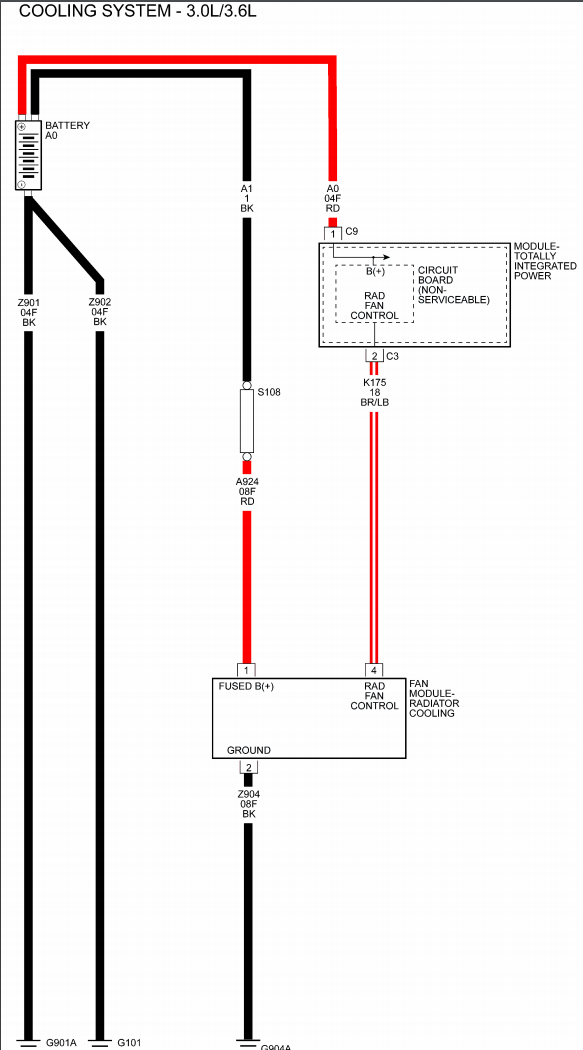
The Distributed Wiring Schematic for 2013+ Jeep Cooling Fans
Why aren't the components on it? Hastate: they aren't used!
Also, as far as I could tell, the exclusively code the fan will always throw on these newer jeeps is P0480, which is all across-the-board to awful the TIPM asked the fan to excite, and couldn't discover that it did, operating room the locomotive overheated under a certain MPH and the computer doesn't have intercourse why.
Assuming you are getting valid temperature readings from the locomotive engine temp sensors, the only if components you cause to worry astir when diagnosing the 2012+ Pentastar 3.6L JK radiator fan not working are:
- The Fan gathering itself
- The TIPM itself (aka, the computer for most accessories in the car)
- The power lead from the electric battery
- The fusible link (S108) between the battery and the power lead
- The ground to location G904A (behind the power steering artificial lake)
Here are some pictures for orientation after I demolished my engine compartment to trace everything as a last chuck effort ahead taking it to the dealership.
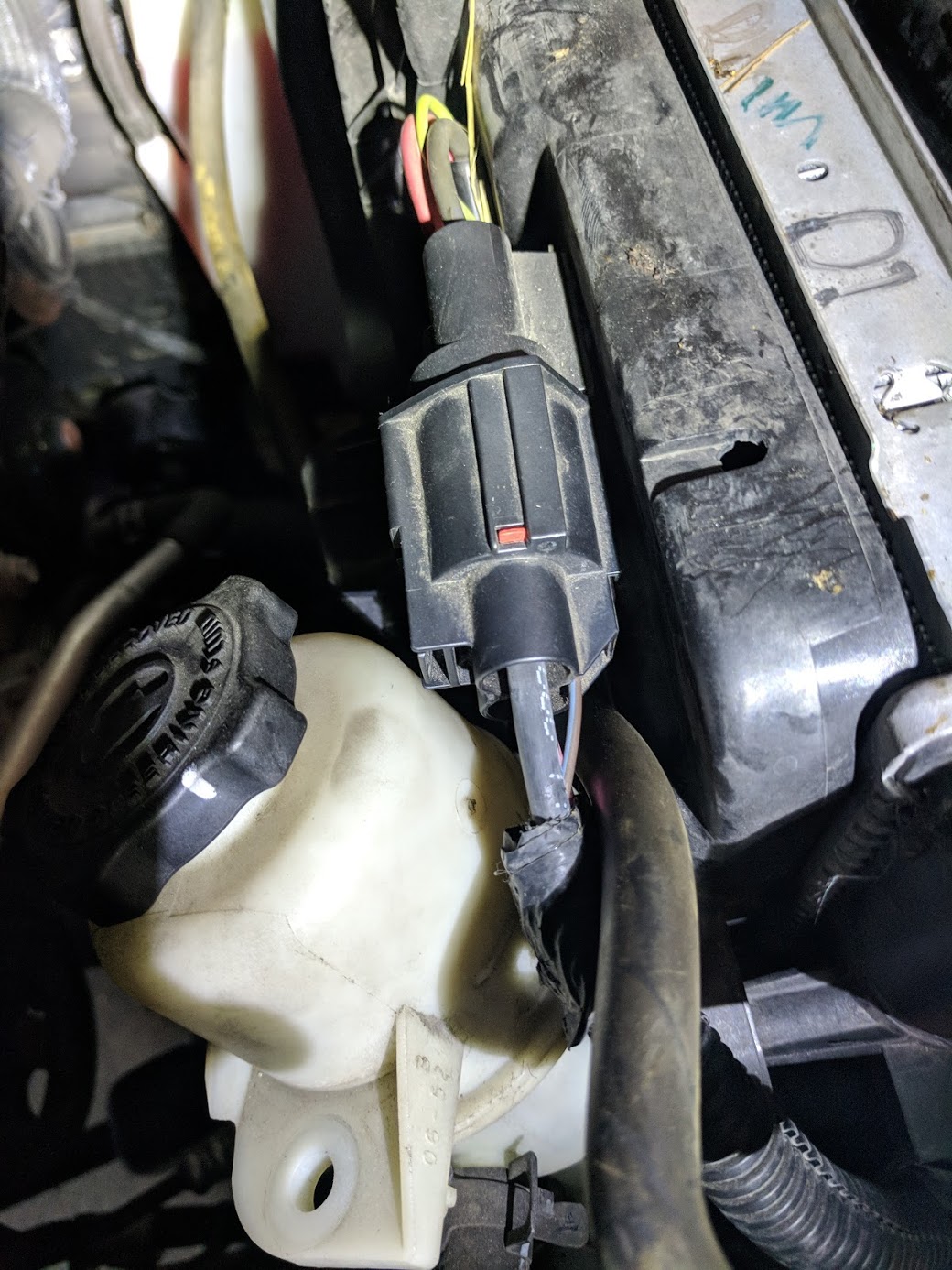
The Fan Harness with Iii Wires
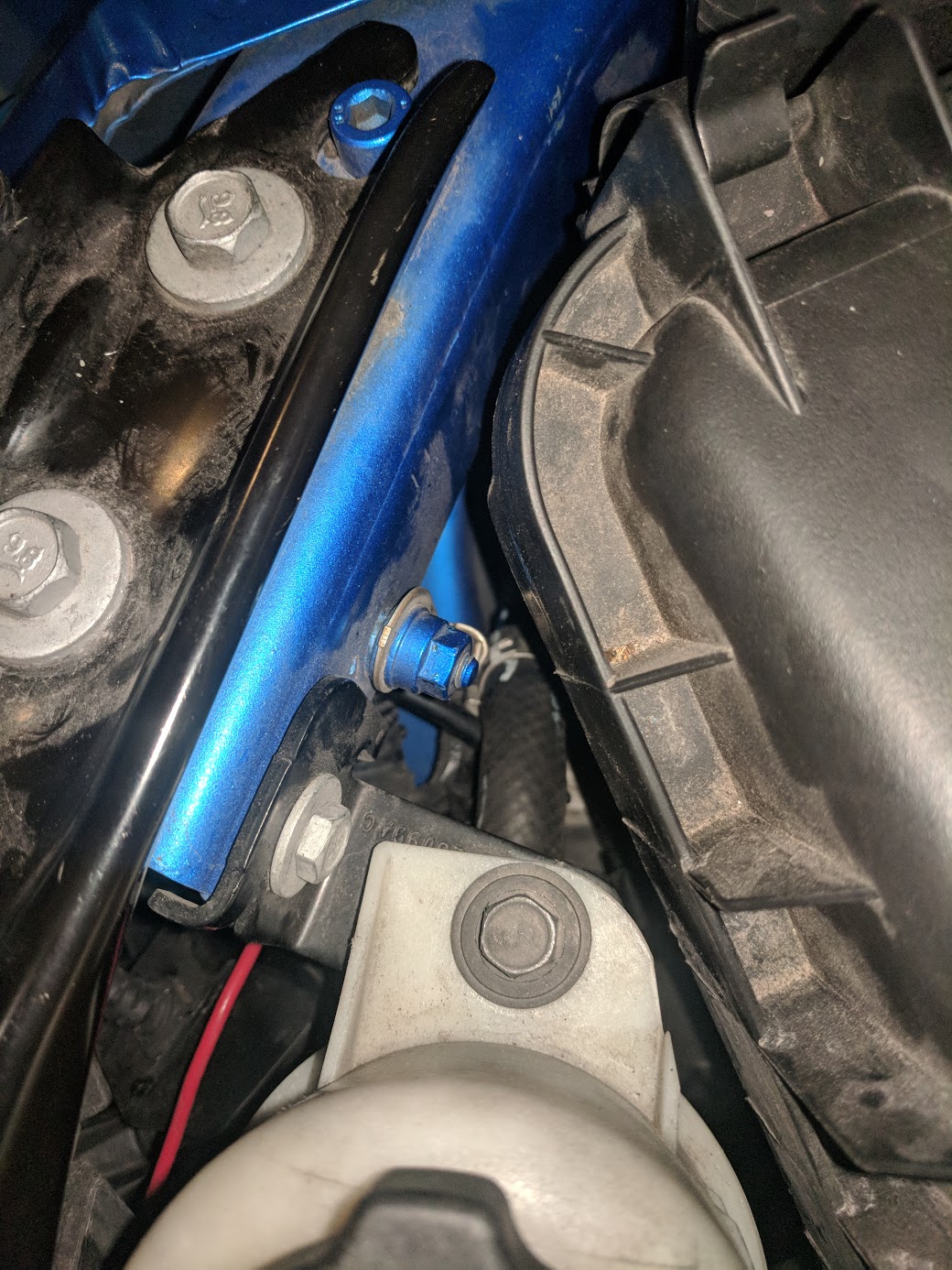
The Dry land Location
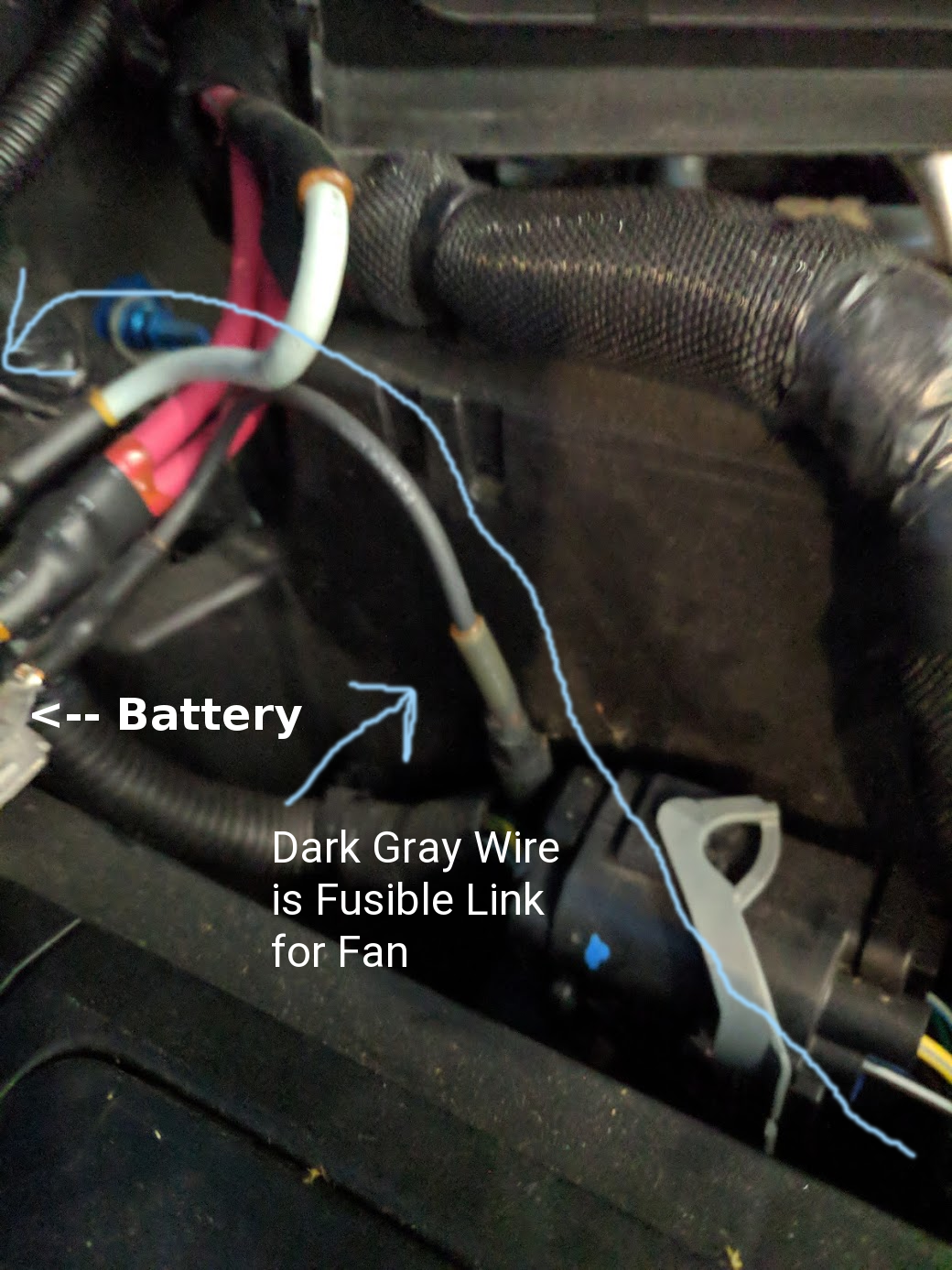
The Fusible Link Connecting to the Battery
Unfortunately, testing the TIPM output requires a TIPM diagnostic tool around (principal equipment) or at any rate an oscilloscope so you can visualize the duty cycle square-wave future day from the PWM signal (even if you don't know it's right-minded, seeing it would add confidence). It's not something I was healthy to ever actually capture victimisation my multimeter.
Likewise unfortunately, you cannot simply bench-test the fan. Believe Maine, I tried. If you climb up the fan to baron and priming coat and effort to provide a direct 12V signal to the PWM lead, nothing will happen and you will think your winnow is broken, when in actuality it may just be ignoring the signal because it is not a valid duty cycle.
So, ineluctably you may have to go to the franchise for a diagnosing (or you May just blindly replace the rooter and the TIPM for a water-cooled $1000 in parts and a bunch of clip in your own garage), all the same, before you make out that, it's worth checking everything else.
So, what was information technology in my case? Shockingly heart-shaped: The 10mm nut holding the fusible link to the battery had worked itself harsh. It was still touching, but IT was not a binding fitting. As a result, I was testing the power to the devotee with a multimeter and getting a solid 12-14 volts, but the connection was not reliable enough to provide the high amperage demands of the lover, so the fan was not spurting, and the code was being thrown. If I had to flirt nostradamus, I'd guess that months ago when I installed my stereo I managed to back this testicle off some (likely on chance event) and didn't notice. It equitable finally worked itself loose with enough bumps and jerks to make the fan unhappy.
If that ISN't your instance, the other two in all probability causes:
- The ground - if the ground is not stable and strong, you'll get the same symptoms I experienced.
- The fusible link - This is just a stretch of wire that serves as a fuse, and is inline between the battery and the main sports fan big businessman wire. If it fails, you wish know with a multimeter at the fan harness atomic number 3 you won't be able to get a 12V signal at all (which does not have to represent the case with phlegmy fitting connections). Government note however, if the fusible link is dyspneic it could mean your fan is over-drawing current. The linkup exists to foreclose the fan from pull besides much power. That typically happens with fans when the motive is overworked Oregon possibly failing. If this is on to you, and after replacing the fusible link it happens once more, you are probably receivable for a fan replacement. A lot of forum posts tattle about cleaning muck up and debris out of the lover - for sure anything that inhibits the fan rotating should live cleaned out before throwing the wholly assembly out.
Thankfully, both the TIPM and fan assembly are relatively easy to remove and replace based on my research. I nearly had the spread out of my Landrover in 15 minutes after removing the air boxwood and whatsoever of the surrounding parts to verify the wiring (however, it turns out I didn't involve to). This article describes the TIPM surrogate process – while I didn't take over mine completely out, I did have it unbolted from the Jeep and was able to ensure under the unit. It's expensive, just not hard to swap impossible.
Good Luck Jeep owners!
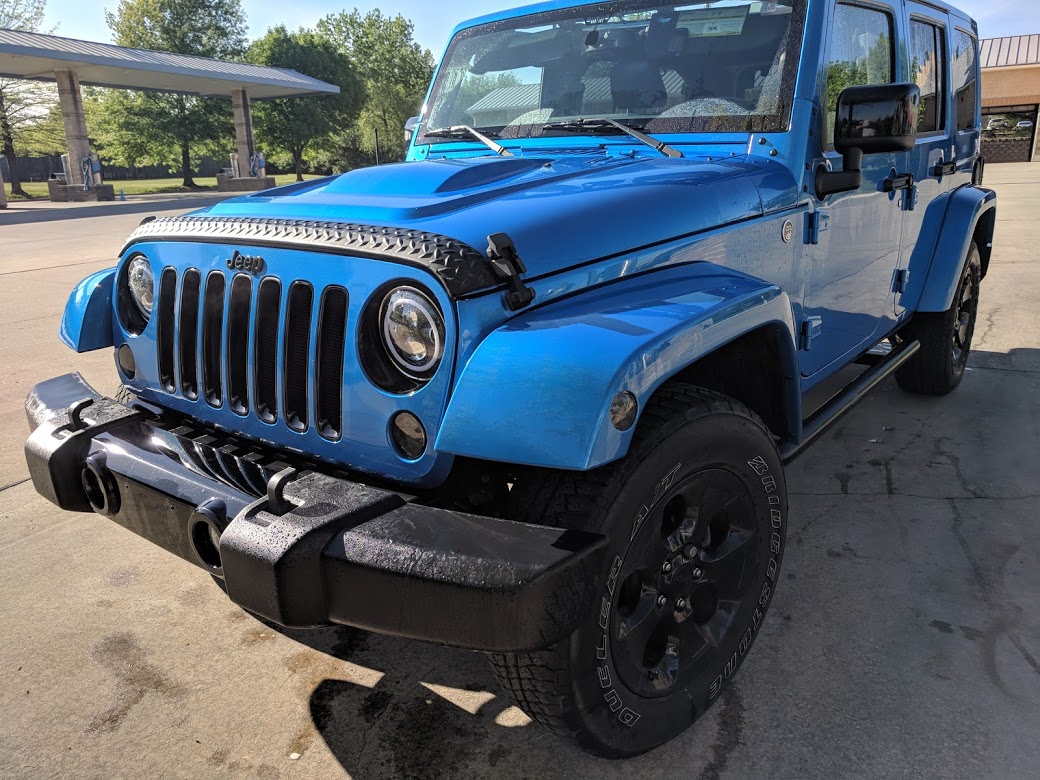
Size of Stock Radiator Electric Fan 2013 Jeep Wrangler
Source: https://realjenius.com/2018/06/28/pentastar_radiator_fan/